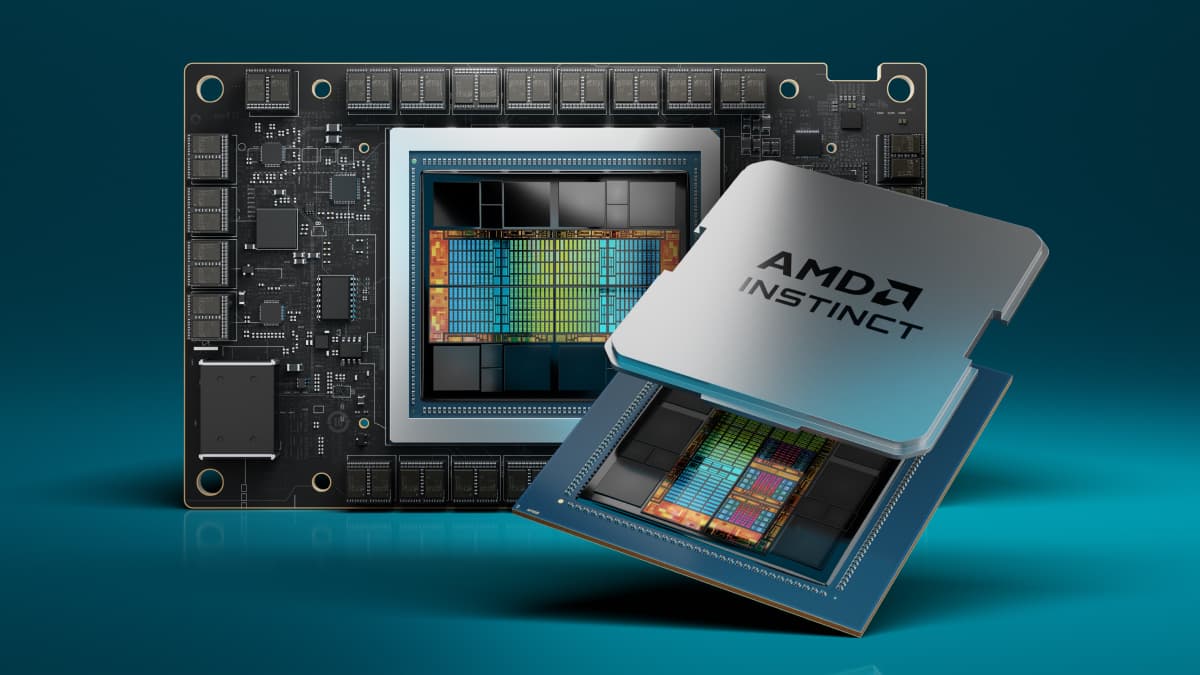
MI350X and B200 can both support large-model training and inference. The useful comparison is the complete server running your software, at a current delivered price.
Core specifications
| Specification | AMD Instinct MI350X | NVIDIA HGX B200 |
|---|---|---|
| Architecture | CDNA 4 | Blackwell |
| Memory per GPU | 288 GB HBM3e | 180 GB HBM3e |
| Memory bandwidth per GPU | Up to 8 TB/s | Up to 8 TB/s |
| Eight-GPU memory | 2.3 TB | 1.44 TB |
| Software stack | ROCm | CUDA |
AMD's MI350X product brief and NVIDIA's HGX reference architecture provide these figures.
The MI350X has more memory per GPU. That may let a model fit with fewer devices or leave room for larger batches and context. Actual speed and cost per result depend on the model, precision, serving or training software, and system interconnect. A generic benchmark does not substitute for testing your workload.
Software and deployment
If you rely on TensorRT, custom CUDA kernels, or a CUDA-only library, account for the engineering work to move to ROCm. If your code already runs on both stacks, benchmark the same model and precision on each proposed server.
Check the exact OEM chassis before planning power and cooling. Both product families have system-level design requirements. The GPU name alone does not specify whether your server is air- or liquid-cooled.
Quote comparison
Ask each supplier to name the OEM server, GPU count, CPU, memory, storage, network cards, cooling method, warranty, and delivery location. Compare the written delivered prices and lead times for those complete builds. Price and allocation need a current supplier quote for the specific build.
If you send us your workload, quantity, destination, and target date, we can request matched configurations and report the available terms.


