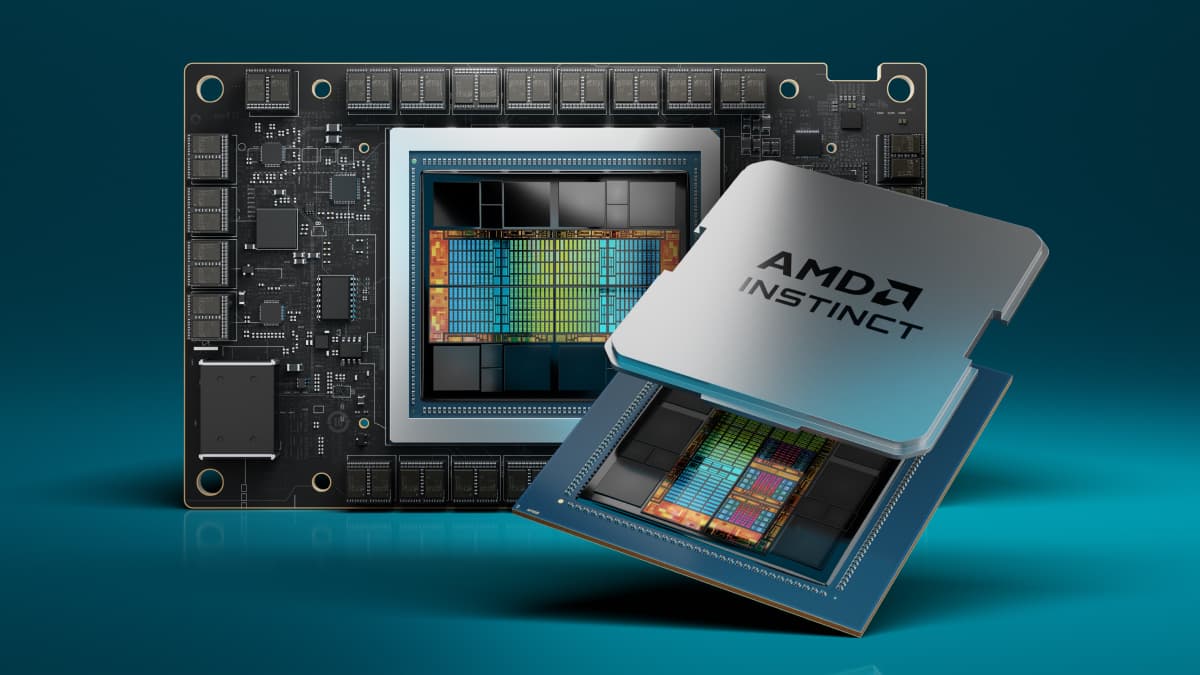
Both the H200 with 141GB HBM3e and the B200 with 192GB HBM3e are shipping and deployed across datacenters worldwide. The H200 brought Hopper's memory up to modern standards. The B200 introduced an entirely new architecture. Here's how they compare for real workloads.
TL;DR: The Quick Decision Framework
Buy H200 if:
- Your models fit in 141GB HBM3e memory
- You want proven Hopper architecture with the most mature driver ecosystem
- Budget is ~$39,999/GPU and you need the best value per dollar for moderate workloads
- Your facility runs air-cooled or standard liquid cooling at 700W per GPU
Buy B200 if:
- You need 192GB memory for 100B+ parameter models
- Inference throughput is your primary concern (FP4 delivers 4x vs H100-class)
- You're building new infrastructure designed for 1000W liquid-cooled GPUs
- Training speed matters more than per-GPU cost
The math: B200 costs 25–40% more per GPU but delivers 2.5x training throughput and up to 4x inference throughput with FP4 precision. For high-utilization deployments, B200 has lower cost per result.
Architecture Breakdown
H200: Hopper Refined
The H200 is an H100 with upgraded memory — same compute silicon, significantly more capacity and bandwidth:
| Spec | H100 SXM | H200 SXM |
|---|---|---|
| Memory | 80GB HBM3 | 141GB HBM3e |
| Bandwidth | 3.35 TB/s | 4.8 TB/s |
| FP8 Performance | 1,979 TFLOPS | 1,979 TFLOPS |
| Process | TSMC 4N | TSMC 4N |
| TDP | 700W | 700W |
| NVLink | 900 GB/s | 900 GB/s |
What Changed: More memory, faster memory. Same Hopper silicon, same compute throughput.
Why That Matters: LLMs like Llama 3 70B with long context windows (128K+ tokens) fit in a single GPU. Multi-modal models with vision encoders fit comfortably. You're swapping less and serving faster.
B200: Blackwell Architecture
B200 is a complete generational redesign:
| Spec | B200 |
|---|---|
| Architecture | Blackwell (5th Gen Tensor Cores) |
| Memory | 192GB HBM3e |
| Bandwidth | 8 TB/s |
| FP4 Performance | ~20 petaFLOPS (sparse) |
| FP8 Performance | ~10 petaFLOPS |
| Transistors | 208 billion (dual-die) |
| Process | TSMC N4P |
| TDP | 1000W |
| NVLink | 1.8 TB/s |
What's New:
- Dual-die chiplet design — Two GPU dies in one package, 2.6x H100's transistor count
- FP4 precision — 4-bit floating point for extreme inference throughput
- 2nd-gen Transformer Engine — Automatic per-layer precision selection between FP4 and FP8
- 8 TB/s bandwidth — 1.67x faster than H200
Performance Comparison
LLM Training (Llama 3 70B, 8-GPU Systems)
| GPU | Training Time (1 epoch) | Relative Speed | Cost per Epoch* |
|---|---|---|---|
| H200 141GB | ~85 hours | 1.0x | ~$3,400 |
| B200 192GB | ~35 hours | 2.4x | ~$1,750 |
Power cost estimated at $0.10/kWh
The B200's training advantage comes from three factors:
- ~5x more FP8 TFLOPS — raw compute throughput per forward/backward pass
- 192GB memory — larger batch sizes reduce communication overhead
- 1.8 TB/s NVLink — 2x faster gradient synchronization between GPUs
LLM Inference (GPT-4 class)
Memory bandwidth drives inference throughput — and the B200 has a commanding lead:
| GPU | Bandwidth | Tokens/sec (est.) | Relative |
|---|---|---|---|
| H200 | 4.8 TB/s | ~3,400/GPU | 1.0x |
| B200 (FP8) | 8 TB/s | ~5,700/GPU | 1.7x |
| B200 (FP4) | 8 TB/s | ~8,500/GPU | 2.5x |
B200's FP4 Transformer Engine is the key differentiator. For inference-heavy deployments serving millions of requests, the cost-per-token advantage is substantial.
Computer Vision & Multi-Modal
Both GPUs handle vision and multi-modal workloads well, but B200's dual-die design and larger memory pool shine for:
- Video generation and understanding
- Multi-modal training (text + image + video + audio)
- Large diffusion models with high-resolution output
Software Ecosystem
CUDA & Framework Support
H200: Fully mature
- CUDA 12.x native with years of optimization
- PyTorch 2.x, TensorFlow, JAX, Triton — all thoroughly tested
- HuggingFace Transformers, vLLM, TensorRT-LLM fully optimized
- Largest library of optimized kernels and benchmarks
B200: Production-ready
- CUDA 12.4+ with native Blackwell support
- PyTorch 2.3+ includes FP4 kernels
- vLLM and TensorRT-LLM ship with B200-optimized paths
- FP4 inference is transparent — set precision flag, frameworks handle the rest
The B200 software stack is mature enough for production. Early adoption rough edges from 2025 have been resolved.
Pricing & Availability
H200
- Price: $39,999 per GPU (market range; confirmed per quote)
- Availability: Lead times typically 2–3 weeks, confirmed during quote review
- Volume Discounts: Available at 4+ units
B200
- Price: Contact for current quotes ($45,000–$55,000 range)
- Availability: Lead times typically 4–8 weeks, confirmed during quote review
- MOQ: No minimum, volume pricing at 4+
Power & Cooling
| Factor | H200 | B200 |
|---|---|---|
| TDP | 700W | 1000W |
| Cooling | Air or liquid | Liquid required |
| Power per 8-GPU server | ~6.5 kW | ~9 kW |
| Annual power cost (8 GPUs, $0.10/kWh) | ~$5,700 | ~$7,900 |
| PDU requirements | Standard 208V/30A | 208V/60A |
Infrastructure Impact:
- B200 requires direct-to-chip liquid cooling with CDU — no exceptions
- H200 works with air cooling in standard datacenter environments
- B200 servers draw 38% more power, requiring beefier electrical infrastructure
If your facility isn't liquid-cooled, the H200 is your only option without infrastructure upgrades.
Total Cost of Ownership
Scenario: 70B Model Inference (Production, 8 GPUs)
| Factor | 8x H200 | 4x B200 |
|---|---|---|
| GPU hardware | $319,992 | ~$200,000 |
| Server platform | ~$35,000 | ~$35,000 |
| Annual power | ~$5,700 | ~$3,500 |
| Throughput | ~27,200 tok/s | ~34,000 tok/s |
| Year 1 TCO | ~$360,692 | ~$238,500 |
| Cost per 1M tokens | ~$0.48 | ~$0.25 |
With B200's FP4 inference, you need fewer GPUs for the same throughput, which lowers total infrastructure cost despite the higher per-GPU price.
Decision Matrix
Choose H200 if:
- Your models fit comfortably in 141GB
- You value the most mature software ecosystem
- Your datacenter has standard power and air cooling
- Budget per GPU is more important than cost per result
- You're expanding existing Hopper-based infrastructure
Choose B200 if:
- You need 192GB for large models or long context windows
- Inference cost per token is your primary optimization target
- You're building new infrastructure and can plan for liquid cooling
- Training throughput directly impacts your business velocity
- You want the highest performance per rack slot
Hybrid Strategy:
Many organizations deploy both:
- H200 for inference — proven, cost-effective for moderate-scale serving
- B200 for training — maximum throughput for research and model development
- Shared storage and networking across both pools
The Bottom Line
H200 is the reliable workhorse. Proven Hopper architecture, excellent memory capacity, works in any datacenter. It handles the majority of production AI workloads cost-effectively.
B200 is the performance leader. When training speed or inference cost per token matters, Blackwell's architectural advantages deliver measurably better economics — especially with FP4 inference.
The deciding factor is often infrastructure. If your facility supports 1000W liquid cooling, B200 is the stronger long-term investment. If not, H200 remains an excellent choice that won't require facility upgrades.
Ready to Order?
We have both H200 141GB SXM5 and B200 192GB available.
- H200: $39,999/GPU (market range; confirmed per quote), typical 2–3 week delivery
- B200: Contact for pricing, 4–8 week lead time
Open a quote or discuss custom configurations.
Browse H200 Specs | Browse B200 Specs | Compare All GPUs | Request Quote
Related Reading
- B200 vs H100 Comparison — Blackwell vs previous-gen Hopper
- NVIDIA B200 Complete Buyer's Guide — Everything about the B200
- GPU Server Pricing Guide — Full server build costs
- Best GPU for Machine Learning 2026 — All GPUs compared
- H100 PCIe vs SXM Form Factor Guide — Understanding form factors